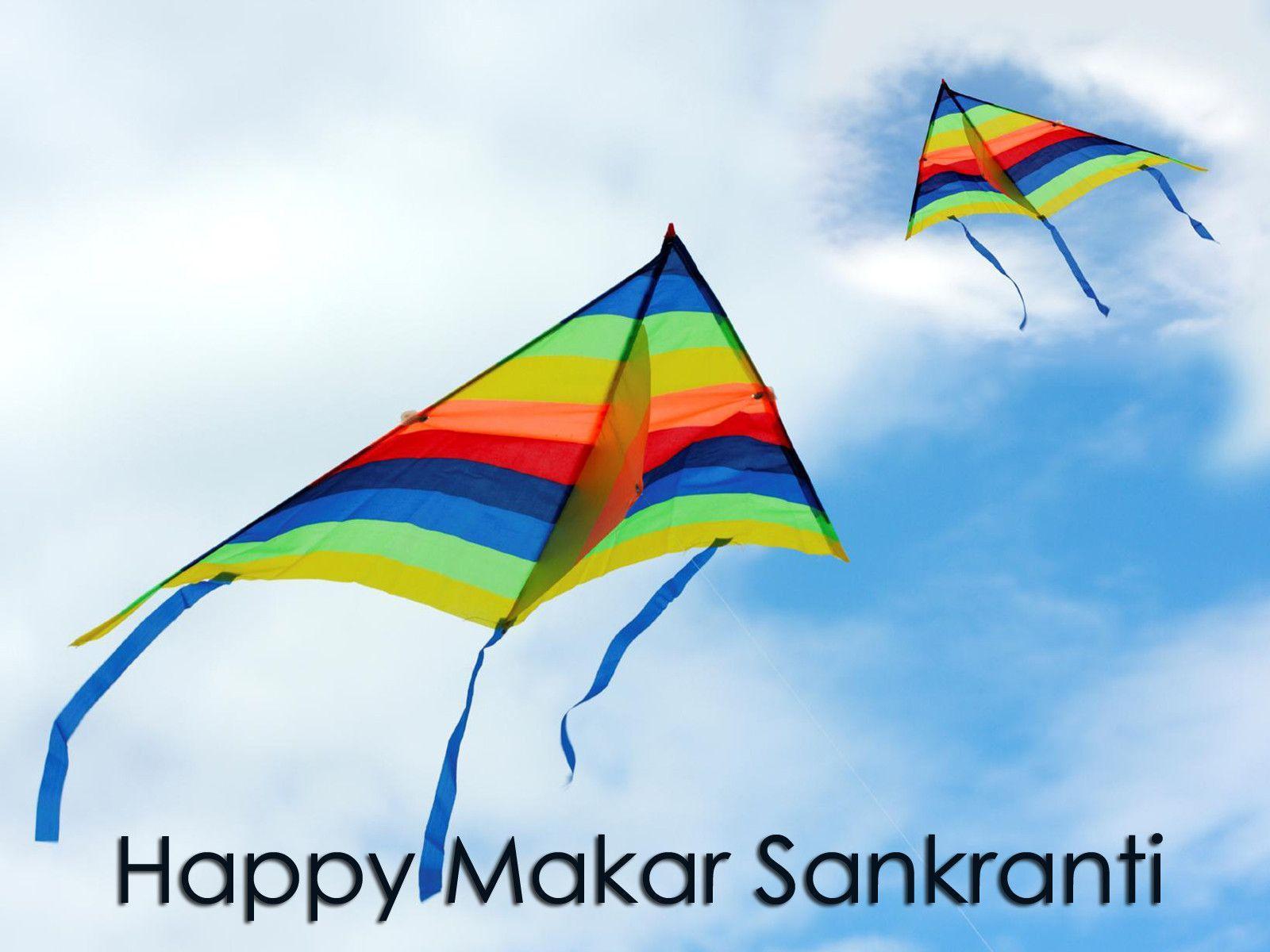
 The saying “Go fly a kite!” takes on a literal meaning every January in India. This happens during the festival of Makar Sankranti or Uttarayana: the kite flying holiday in Maharashtra, India. Makar means Capricorn. Sankranti implies a movement or change of location. The reason for the celebration is to commemorate the entry of the Sun into the sign of Capricorn in Vedic Astrology (which uses the sidereal zodiac). Makar Sankranti falls on January 14th.
VEDIC ASTROLOGY AND MAKAR SANKRANTI
Being a lunar based system, Vedic astrology or Jyotish, pays more attention to the Moon rather than the Sun, which forms the basis of Western astrology. Yet, the festival of Makar Sankranti is a marked exception.
On the auspicious day of Makar Sankranti 2026 the Sun begins its Northernly movement in the sky. This commences the beginning of longer and warmer days. It also is a more auspicious time for spiritual practitioners to attain self-realization. Makar Sankranti is a festival which propitiates Surya, the Sun God. It honors all the gifts the Sun bestows on us, especially for helping the crops and the harvest grow so abundantly. Uttaryana marks the transition from the “night” of the Gods (dakshinayana) to the “days” of the Gods.
 When the Sun enters sidereal Capricorn on Makar Sankranti 2026, it is entering into a sign ruled by Saturn. Saturn is currently placed in Pisces. Saturn is considered to be the child of the Sun in astrological lore. Yet, the two have a strained relationship. For this month (and next, when the Sun is in Aquarius, which is also ruled by Saturn) the son (Saturn) must take care of this father (Sun), who is a guest in his home.
People celebrate Makar Sankranti 2026 in Maharashtra or Gujarat by climbing on top of tall building and flying colorful kites. They engage in the friendly competition of trying to “cut” another person’s kite from the air. Additionally, they give their friends and relatives ladus (sweets) made from white sesame seeds and jaggery. Residents either receive or do self-massages with sesame oil (the traditional oil used in Ayurvedic medicine). It is believed that sesame originates from Lord Vishnu’s body (the preserver of the universe) and that engaging in specific rituals with sesame seeds and sesame oil will rid the body of impurities.
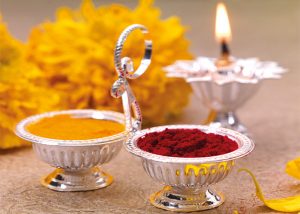
Wives in Maharashtra will purchase new utensils for their kitchen on Makar Sankranti 2026. The ladies also engage in a ritual called “haldi kumkum”. They adorn each other with kumkum (the red vermillion or bindi – which was originally worn on the forehead to reflect a woman’s married status). Additionally, they offer each other haldi (turmeric powder) to bless their husbands’ lives.
LORD VISHNU
Lord Vishnu is also associated with Makar Sankranti. The origin of this holiday dates back to the epic the Mahabharata, in which the hero Bhishma lay wounded on the battlefield, with arrows piercing his body. However, he persevered for 58 days, waiting for the Sun to move from dakshinayana (Southwardly movement) to uttaryana (Northwardly movement) before he left his physical body. During this period, he spent the time instructing his nephew, King Yudhisthira.
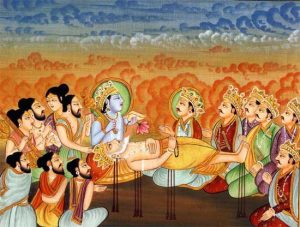
Bhisma was the epitome of dharma, or right action. Therefore, he taught Yudhistira the Vishnu Sahasranam (the 1,000 names to Vishnu). The death anniversary of Bhisma is known as Bhisma Pitamah. Lord Vishnu is the preserver of the cosmos, He is the upholder and epitome of dharma (right action). This is also an auspicious day for spiritual journeys or for saints to leave their bodies, or take samadhi.
HOW INDIANS CELEBRATE MAKAR SANKRANTI 2026
In the state of Gujarat, people celebrate the holiday that they call Uttarayana by having the elders in the family system give gifts to the younger members. Students will also be offered scholarships on this auspicious day. These are often in the subjects of philosophy and Jyotish (Vedic astrology). People eat undhiya, chikki, jalebi, and ladoo. Cow are specially fed. Cows are the sacred animal in India due to their quality of providing nurture for others.
In the state of Punjab, the residents will celebrate on the night before Makar Sankranti 2026 with a large bonfire and offer sweets and rice into the fire. That night is known as Lohri. Then, on Makar Sankranti, which the Punjabis call Maghi, they engage in traditional dances and partake in a feast. They prepare gur havla, made from jaggery, wheat four, ghee, and roasted nuts.
In Uttara Pradesh, the day is called Khichadi, which is the traditional food made from basmati rice hand moong dahl. Additionally, in Madhya Pradesh, the citizens celebrate the day as Sukarat.
The festival is known as Pongal in Tamil Nadu and Southern India. It’s a four day festival which commences on Makar Sankranthi. Residents worship the harvest God. Farmers harvest their paddy. Women prepare sweets made of rice, ghee, grains, and milk.
SURYA
Whatever region of India people reside in, they traditionally celebrate with sweets, kites, and with friends and family. Wherever possible, Indian start the day with a dip in the holy Ganges (pronounced as Gung-ahh) River. Surya, the Sun God, is also worshiped throughout the country. Fire ceremonies or yajnas are also a common occurrence. People also give donations of sesame seeds, wheat, jaggery, corn, clothing, and money to the poor.
The Sun is responsible for illumining everything around us and for shedding light on us, both literally and figuratively. Surya, the Sun God, is worshiped by many astrologers to help them illumine the lives of others. You may wish to chant the Gayatri Mantra on Makar Sankranti 2022. This is a mantra to Surya Deva (the Sun).
On Makar Sankranti 2026 we can honor the light which shines within ourselves as well as others.
In Jyotish, Surya is a significator of health. We can focus on our own health, healing, and well-being and take steps that we keep our inner and outer luminosity strong.
To begin the day, you may wish to give yourself an Ayurvedic oil massage with sesame oil. You may also enjoy reciting the Vishnu Sahasranam during the day. Be sure and spend the day with family or friends, whether in person and socially distanced or online.
Celebrate Makar Sankranti 2026 in whatever way is illuminating and healing for you. Shubh Makar Sankranti 2026!